Tunnel finishers are widely used in dry cleaning plants, commercial textile laundries and medical laundry facilities due to low labor
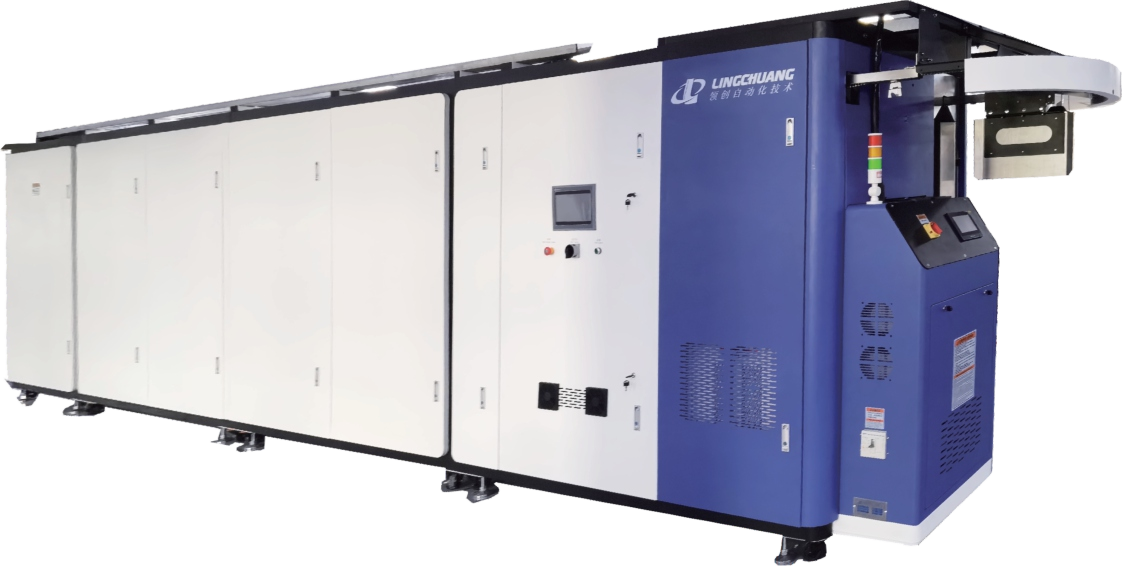
demand and fast return on investment. A tunnel finisher is a continuous garment finishing machine that removes wrinkles from large
quantities of garments in one pass. First, garments enter the steam chamber to enhance fabric flexibility. Next, powerful hot airflow
removes wrinkles along the fabric. Finally, garments are cooled and set with cold air before exiting the machine.
Why Choose a Tunnel Finisher?
In most factories, garment post-finishing accounts for 60% to 70% of direct labor costs. After processing by a tunnel finisher, only
collars, cuffs and detailed parts need manual touch-up. Factories can cut labor costs by 30% to 50%. This is calculated based on direct
labor savings, initial investment compared with traditional manual work, lower energy consumption and reduced floor space occupation.
Difference Between Tunnel Finisher and Form Finisher
A form finisher adopts batch processing with relatively low productivity. A tunnel finisher is a fully automated system with continuous
finishing and wrinkle removal, delivering much higher productivity. Around 90% of the finishing work is completed inside the tunnel,
with garments moving continuously in and out of the steam-air tunnel via conveyor hangers.
Comparison: Tunnel Finisher vs Form Finisher
**Tunnel Finisher**
- Continuous processing
- Optimized steam and temperature control for batch processing
- Output: 450 to 5,000 pieces per hour
- Compatible with various garments: shirts, skirts, dresses, coats, trousers, T-shirts, sweatshirts and sportswear
**Form Finisher**
- Batch processing mode
- Steam and temperature cannot be fully optimized as it processes only one piece at a time
- Output: approximately 70–100 pieces per hour
- Only suitable for specific single categories of garments State-of-the-art tunnel finishers are built with stainless steel and insulated
thermal materials. Equipped with solid-state controllers or microprocessors, they precisely regulate steam dwell time, conveyor speed,
drying chamber temperature, air flow volume and garment passing speed.
Working Modules of Tunnel Finisher
Pre-treatment Module
Most garments require no pre-treatment. However, special natural fiber fabrics such as cotton and linen rely
heavily on pre-treatment. Garments made of these fibers are preheated with moderate-temperature air to better absorb steam.
Steam softens natural fibers, making wrinkle removal much easier during ironing. A moisture content of 25%–35% is the optimal
condition for wet-to-dry processing.
Ironing Module
The ironing cycle depends on proper garment arrangement and optimal steam circulation. It is important to avoid large gaps between
hanging garments. When the conveyor is fully loaded, hot air flows through the garments rather than around them. Garments should
remain stable without shaking during finishing.
Steam Application Module
Steam dosage varies greatly according to fabric type, initial garment moisture condition and finishing quality requirements. Steam
volume is determined by fabric material. Fibers with different moisture regain and elastic recovery require different steam types. For
high-moisture-regain cotton, saturated wet steam is preferred. Saturated steam is formed by heating water to 100°C at atmospheric
pressure. Superheated dry steam is suitable for synthetic fibers with low moisture regain. Excessive steam will make garments limp
and re-wrinkled, while insufficient steam leads to poor ironing quality. Premium tunnel finishers adopt multi-stream steam chamber
design, allowing steam to penetrate fabric evenly and thoroughly, instead of simple direct steam spraying. High-quality finishing relies
on precise regulation of steam volume and airflow mode.
Heated Air Circulation Module
Inside the tunnel, high-speed vibrating circulating air can reach up to 186°C. The chamber is fitted with energy-efficient air circulation
devices to maintain consistent working temperature and eliminate all types of wrinkles. An air curtain is usually installed between the
steam module and air circulation module to isolate steam, prevent heat loss and improve energy efficiency.
Post-finishing Module
Finished garments come out flat and fully dried, especially lined apparel. Air nozzles blow temperature-controlled airflow from the
bottom to finalize shaping. The air curtain prevents steam condensation and avoids water droplet stains on garments.
Key Components of Tunnel Finisher
Conveyor System
Proper hanging arrangement on the conveyor track is as important as loading garments onto hangers. The conveyor
system must be oil-free and clean. The loader and hanger hook design shall adapt to all common hanger types. It is critical to keep uniform
spacing without empty hooks. Tunnel finishers perform best at full load. Densely arranged garments stabilize each other during air
circulation, reducing shaking and ensuring hot air passes through fabric layers efficiently.
Tunnel Cabinet Body
The cabinet shall be made of stainless steel or Teflon-coated material to avoid rust and fabric staining. Stainless steel also reflects heat
back into the tunnel for better energy saving. Thermal insulation of the cabinet is essential. Insulation layers embedded in the cabinet
wall maintain stable internal temperature without frequent heater activation, effectively cutting energy costs.
Key Points Before Purchasing a Tunnel Finisher
1. Steam generation cost varies by fuel type; generally, gas-fired boilers have lower operating costs than electric boilers.
2. Steam recovery function greatly reduces energy consumption; models with steam recycling save far more operational cost.
3. Tunnel finishers support long-term continuous operation and round-the-clock production with only a few minutes of daily routine
maintenance.
5. Different garment categories require matched hangers; the conveyor system must be compatible with multi-type standard hangers.
6. Verify power consumption and steam consumption before purchase to calculate operational cost and ROI. Prefer equipment with low maintenance consumable consumption. 7. Long-distance transportation and storage may cause peculiar odors on garments. Modern tunnel finishers can be equipped with fragrance spraying modules in the post-finishing chamber to eliminate unwanted odors effectively.